Can an office be repainted without closing?
Yes. An occupied office is repainted by dividing the floor into zones and painting each zone outside working hours. Each area is dry and back in use the next business day.
The plan has four parts: zones, shifts, protection and communication. Get those on one page before anyone opens a can.
How do you phase the work by zone?
Divide the floor plan into zones a crew can finish in one shift. Order them so no team is disrupted two nights in a row.
- Group rooms by type: open office, private offices, conference rooms, corridors and lobby, break room and restrooms.
- Start with the lowest-traffic zone, so the routine is settled before the crew reaches the busy areas.
- Schedule conference rooms and the lobby around the calendar: board meetings, client visits and all-hands days.
- Keep repairs one zone ahead of paint, so patches are dry and primed before finish coats.
- Leave one open shift at the end for touch-ups and the punch list.
Mark the zones on the floor plan and give each one a date. That page is the schedule everyone works from.
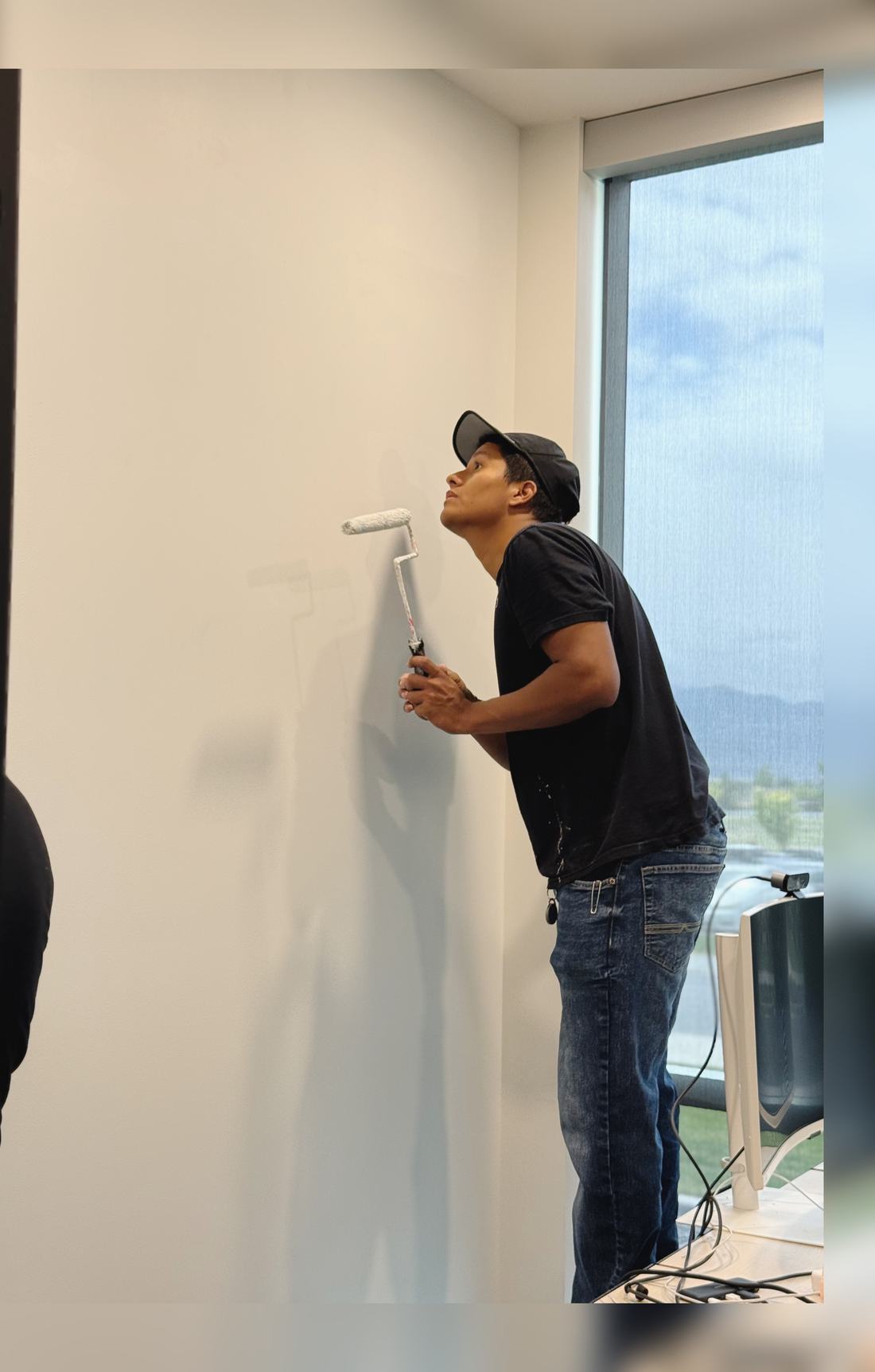
When should you use nights and when weekends?
Use weeknights for small zones and weekends for large open areas. A weekend gives the paint two days to dry before anyone sits down.
- Weeknights: private offices, conference rooms and short corridors. The crew starts after the last person leaves and clears out before the first arrival.
- Weekends: open office floors, lobbies, high walls and deep accent colors.
- Building rules: ask the property manager about after-hours work requests, security check-in and freight elevator hours.
- Air: many buildings set back the HVAC after hours. Ask for it to run during and after each shift.
Retail centers set stricter rules than office buildings. VASCO has worked after hours inside Fashion Place mall, with equipment cleared before opening.
Does low-VOC paint remove the odor problem?
Mostly. A low-VOC or zero-VOC interior paint, plus ventilation during and after each shift, handles odor in a typical office.
In paint, VOCs are mostly solvents that evaporate as the coating dries. The EPA advises increasing ventilation when using products that emit VOCs and following the label precautions.
- Ask for the product data sheet and read the VOC content, listed in grams per liter.
- Ask for the figure after tinting. Colorant can raise the VOC content of deep colors.
- Schedule primers, stain blockers and door enamels before a weekend. They can smell stronger than wall paint.
- Tell staff with sensitivities which night their zone is painted, so they can sit elsewhere the next day.
How are furniture and IT protected?
Furniture stays in the room. It is pulled off the walls far enough for a ladder and a roller, then covered.
- Desks and chairs are covered with plastic, and floors with drop cloths or floor protection.
- Staff clear desktops and take personal items off the walls the evening before their zone.
- IT decides what is powered down, unplugged or moved. Painters do not disconnect equipment.
- Wall displays, access points, thermostats and sensors are masked in place unless IT removes them.
- Server and network rooms are excluded, or painted with IT present.
- Sprinkler heads, smoke detectors and alarm devices are masked around and never painted.
- The crew photographs each area before moving anything, so every piece goes back where it was.
Which color and sheen belong in each area?
Pick sheen by how often a wall is touched and washed. Use flatter finishes on large walls with side light, and glossier finishes where hands, carts and water reach.
| Area | Typical sheen | Why |
|---|---|---|
| Open office and private offices | Matte or eggshell | Low glare under office lighting, and it wipes clean |
| Corridors and lobbies | Eggshell or satin | Stands up to bags, carts and frequent cleaning |
| Conference rooms | Matte or eggshell | Low glare for screens and cameras |
| Break rooms and kitchens | Satin or semi-gloss | Resists moisture and splashes |
| Restrooms | Semi-gloss | Handles moisture and cleaning chemicals |
| Doors, frames and trim | Semi-gloss | The hardest-wearing finish for surfaces hands touch all day |
| Drywall ceilings | Flat | Hides joints and throws no glare |
| Accent and brand walls | Matte or eggshell | Deep colors show roller laps and joints at higher sheen |
Higher sheen shows more of the wall underneath. For walls with patches or window light, see our guide to drywall finish levels.
For color, start with the building standard if the lease requires it. Test a section on site before committing, and record brand, color code and sheen for every surface.
What should you tell staff?
Send one notice a week ahead with the zone map, the dates and what each person has to clear.
- Which night each zone is painted, and when it is back in use.
- What to clear: desktops, the floor under the desk and anything hung on the walls.
- What to expect in the morning: wet-paint signs and door frames that may still be tacky.
- A named contact for questions and problems.
What does the contractor need from you?
The contractor needs access, building rules and insurance wording in hand before the first shift.
- Access: badges or keys, alarm instructions and a contact who answers at night.
- Elevator: the freight elevator reservation and the building's padding rules.
- Parking and loading: where a marked van can park overnight, and dock hours.
- COI wording: the exact certificate holder and additional insured names from the lease or property manager, plus required endorsements.
- Paint standard: brand, color and sheen, or permission to sample the walls.
- Decisions: one person who can approve a change order the same day.
Buildings commonly ask for additional insured, waiver of subrogation, and primary and non-contributory endorsements. VASCO issues certificates per property with those endorsements and holds Utah B100 #12546496-5501.
What drives the cost of an occupied repaint?
Cost follows labor hours, and five things move the hours: wall condition, color change, access, height and finish.
- Wall condition: the number and size of repairs before paint.
- Color change: the same color needs fewer coats than light over dark or a deep accent.
- Access: night shifts, furniture to move and protect, and the number of separate zones.
- Height: open ceilings, stairwells and lift work.
- Finish: higher sheen and smoother walls take more prep.
Our commercial patch and paint page shows how those factors appear on a quote.
What happens after the repaint?
Keep the paint schedule and the labeled leftover paint, because later touch-ups depend on both.
Corridors and the walls behind chairs scuff first. A monthly maintenance plan puts those touch-ups on a scheduled Punch Day.